Archaeology Students Unearth a Viking‑Age Mass Execution Pit — And a Medically Trepanned Giant Who Shouldn’t Have Existed
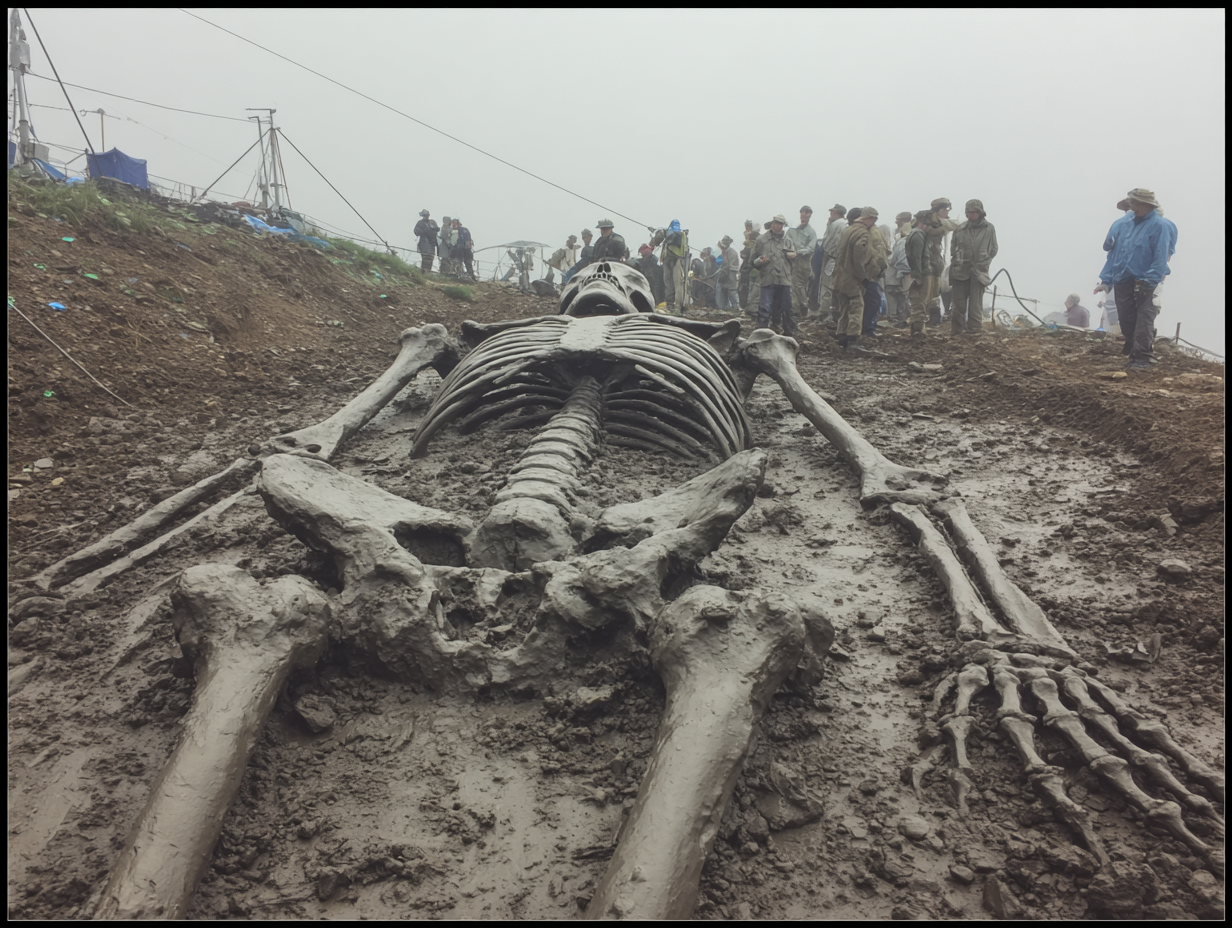
A Discovery That Rewrites the Violence and Medicine of the Viking Frontier
A University of Cambridge training excavation at Wandlebury Country Park, just three miles south of the city, has revealed one of the most significant early medieval burials ever uncovered in Cambridgeshire. What began as a routine student dig in 2025 quickly escalated into a major archaeological discovery: a Viking‑Age mass grave containing the remains of at least ten young men, several of whom show unmistakable signs of execution, dismemberment, and ritualized post‑mortem handling.
The pit itself was cut into the chalk bedrock and sealed beneath layers of soil that had remained undisturbed for more than a millennium. Students initially uncovered scattered bone fragments, but as excavation expanded, the team realized they were dealing with a deliberately constructed mass deposition, not a natural accumulation or battlefield scatter. The mixture of complete skeletons, isolated skulls, and stacked limb bones indicates that the bodies were placed in the pit in multiple stages, suggesting a structured event rather than a single moment of violence.
Radiocarbon dating places the burial between 772 and 891 CE, aligning it with the turbulent period when Cambridgeshire sat on the contested border between Anglo‑Saxon Mercia and Viking‑controlled East Anglia. This was a frontier defined by shifting power, raiding, retaliatory violence, and the imposition of new legal and military systems. Written sources from the period describe the region as a zone where public punishments, executions, and displays of enemy remains were used to assert authority and intimidate rival groups.
The Wandlebury site fits this historical landscape precisely. The location itself has long been associated with assembly gatherings, ritual activity, and judicial functions dating back to the Iron Age. Its elevated position and visibility across the landscape would have made it an ideal place for publicly staged acts of punishment or political messaging. The combination of beheading injuries, disarticulated limbs, and bodies placed face‑down strongly supports the interpretation that these men were executed and intentionally displayed before being gathered and buried.
The discovery also provides rare physical evidence of early medieval medical intervention. Among the dead was a young man of extraordinary height — nearly 6 feet 5 inches — whose skeletal proportions indicate a likely pituitary tumor causing excess growth hormone. A trepanation hole drilled into his skull shows that someone attempted a surgical procedure to relieve pressure or treat neurological symptoms. The presence of healing around the edges of the opening confirms he survived the operation, offering a rare glimpse into the medical knowledge and practices of the period.

A Giant Among the Dead — Nearly 6’5” in the 9th Century
The most extraordinary individual recovered from the Wandlebury mass grave was a young man estimated to be 17–24 years old, standing approximately 1.95–1.96 meters (6'5"). In the context of early medieval England—where the average adult male height hovered around 1.68 meters (5'6")—his stature would have been so anomalous that he would have been perceived as a physical outlier, if not a literal giant, by the people of his time.
His skeleton immediately stood out to osteologists. The long bones of the arms and legs displayed proportions consistent with excessive growth hormone production, a hallmark of pituitary gigantism. Subtle morphological indicators—such as the thickness of the cortical bone, the length of the femur relative to the tibia, and the overall robustness of the limb shafts—support the interpretation that this individual suffered from a pituitary adenoma, a benign tumor that disrupts normal endocrine function.
But the most striking feature was found in the skull: a 3‑centimeter circular opening cut cleanly through the cranial bone. This was not the result of trauma or decay. It was a trepanation, a deliberate surgical procedure in which a practitioner removed a portion of the skull to relieve pressure or treat neurological symptoms. The edges of the opening show clear signs of osteogenic healing, meaning the young man survived the operation long enough for bone regrowth to begin.
This detail is crucial. It demonstrates that whoever performed the procedure possessed:
• Knowledge of cranial anatomy
• The ability to control bleeding
• Tools capable of cutting bone with precision
• An understanding—however rudimentary—of neurological symptoms
Cambridge researchers believe the trepanation was likely intended to alleviate intracranial pressure, severe headaches, visual disturbances, or seizures caused by the pituitary tumor. These symptoms are well‑documented in modern clinical cases of gigantism and acromegaly, and the presence of a trepanation aligns with known early medieval medical practices across Europe, where trepanation was used to treat head trauma, chronic pain, and perceived spiritual afflictions.
The fact that this individual lived long enough for the bone to heal suggests that the procedure was not only intentional but successful in the short term. This makes him one of the best‑documented early medieval examples of a person who both suffered from a rare endocrine disorder and underwent a complex cranial surgery.

A Frontier Zone of Conflict and Control
The radiocarbon dates from the Wandlebury mass grave fall squarely within one of the most volatile periods in early medieval English history. Between the late 8th and late 9th centuries, the region that is now Cambridgeshire lay directly on the shifting frontier between Anglo‑Saxon Mercia and the expanding Viking‑controlled territories of East Anglia, later incorporated into what chroniclers called the Danelaw. This was not a stable border. It was a zone defined by military pressure, political upheaval, and competing systems of law and authority.
Contemporary written sources — including the Anglo‑Saxon Chronicle, Mercian charters, and later monastic histories — describe a landscape marked by:
• Raids and counter‑raids, often seasonal, targeting settlements, monasteries, and supply routes
• Territorial disputes as Mercian and Viking forces attempted to secure river crossings, trade routes, and defensible high ground
• Public punishments, including executions carried out at assembly sites or boundary markers
• The display of enemy body parts, a practice used to assert dominance, intimidate rivals, and reinforce legal authority
These practices were not symbolic gestures. They were tools of governance in a world where political legitimacy was often demonstrated through visible, physical control over the bodies of enemies or criminals.
The Wandlebury pit aligns with this historical pattern with striking precision. The combination of beheading injuries, dismembered limbs, face‑down burials, and haphazard deposition strongly suggests that the individuals were not casualties of a battle but victims of organized, punitive violence. The presence of disarticulated bones that appear to have been exposed before burial supports the interpretation that some remains were displayed publicly — a practice well‑attested in early medieval Europe as a means of reinforcing social order.
Wandlebury’s long history as a ritual and judicial gathering place further strengthens this interpretation. The site’s Iron Age earthworks and its continued use as a meeting point into the early medieval period make it a plausible location for legal assemblies, executions, and the enforcement of frontier justice. The mass grave may represent the aftermath of such an event: the final deposition of individuals who had been punished, displayed, or executed as part of a political or military statement.
This discovery is also significant in a broader archaeological context. It is the most substantial human‑remains find at Wandlebury since 1976, when a smaller cluster of 9th‑century skeletons was uncovered nearby. The new excavation not only confirms that the area was a focal point of early medieval activity but also provides rare physical evidence of the brutality described in written sources. While chronicles often exaggerate or moralize violence, the Wandlebury pit offers a direct, unfiltered glimpse into the realities of life — and death — on a contested frontier.
Together, the skeletal evidence and the historical record paint a picture of a region where political authority was asserted through force, where borders were maintained through fear as much as diplomacy, and where the bodies of the dead became instruments of control.